




Burdur Mehmet Akif Ersoy University has been selected as a pilot university in the field of 'animal husbandry' within the scope of the Project for the Differentiation and Specialization of Universities Focused on Regional Development, conducted in coordination with the Council of Higher Education and in collaboration with the Presidency of the Republic of Turkey's Strategy and Budget Directorate. The aim is for universities to become actors of regional development through the activities they will carry out in their province/region. Within the framework of the 'Program for the Differentiation and Specialization of Universities Focused on Regional Development', Burdur Mehmet Akif Ersoy University aims to increase its competitiveness in agriculture and animal husbandry by harmonizing the existing and future infrastructure of the university with the potentials of Burdur province. Accordingly, within the scope of the project 'Increasing the Sectoral Competitive Power of Burdur Province: Integrated Development through Differentiation in Agriculture and Animal Husbandry', an integrated development model based on differentiation in agriculture and animal husbandry has been developed in line with the local potential and local and regional needs analyses. Additionally, in line with the main objective of the project; studies have been designed to reveal the socio-economic conditions of the groups engaged in animal husbandry activities in the rural areas of Burdur province and to identify the problems of the animal husbandry sector. To implement the integrated development model based on differentiation in agriculture and animal husbandry locally, training programs for Farmers, Cattle and Sheep Breeders have been initiated under the MAKÜ Farmer School between the years 2019-2024.
The Village University Project, a multidimensional initiative adopting an integrated development model by differentiating in agriculture and animal husbandry to support rural development in Burdur province,
has been accepted as a sub-project of the Project for the Differentiation and Specialization of Universities Focused on Regional Development, Increasing the Sectoral Competitive Power of Burdur Province: Integrated Development through Differentiation in Agriculture and Animal Husbandry in February 2025, and is a project developed and implemented by Burdur Mehmet Akif Ersoy University.
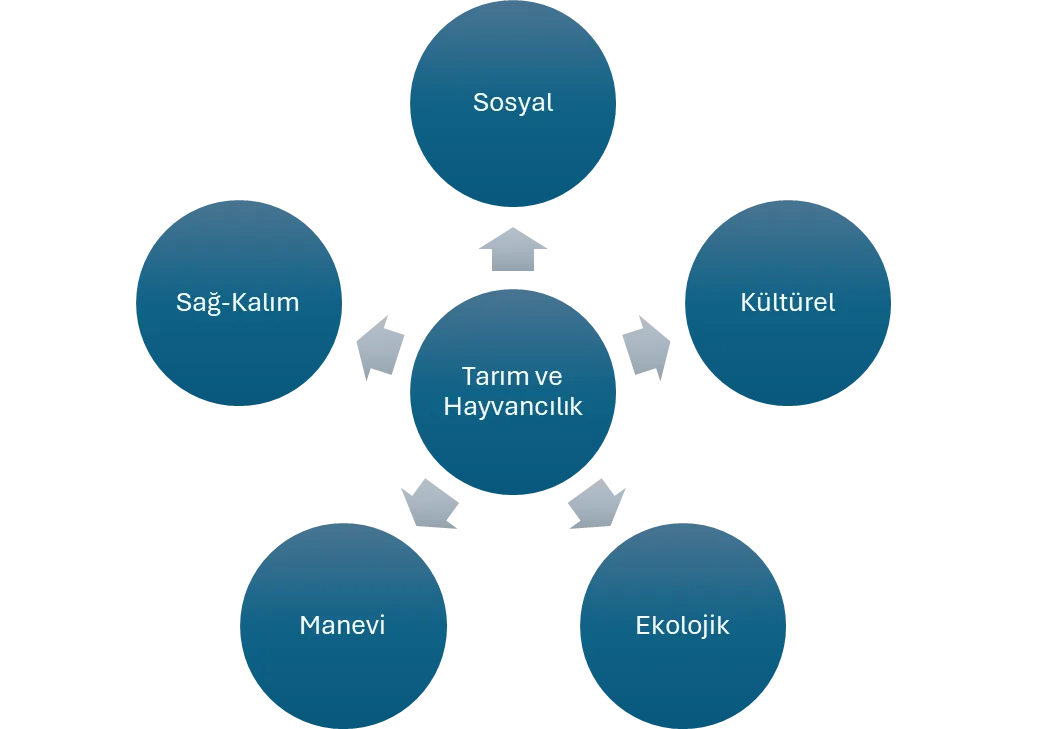
The project will be implemented over 28 months in 31 villages and 5 district centers, aiming to increase the agricultural and animal husbandry capacity in the region while also covering social, cultural, ecological, and spiritual development areas. The trainings will cover areas such as economic literacy, ecological production, healthy living, disaster awareness, and social risk management, while cultural activities and youth volunteer activities aim to strengthen social ties.
The project is carried out with an integrated development approach. Integrated development is an approach that entails addressing development practices in a multidimensional manner. The integrated development model based on differentiation in agriculture and animal husbandry is a model realized through multidimensional development efforts centered on agricultural and animal husbandry-related development endeavors. Within this model framework, the method of the Village University project constitutes a development approach that focuses on agricultural and animal husbandry-related development efforts and encompasses social, cultural, ecological, spiritual, and survival-based development practices that can be defined as other dimensions of development. In the agriculture and animal husbandry-focused multidimensional development approach, the other dimensions of development are supportive elements for the capacity of agriculture and animal husbandry in the region where development practices will be carried out. On the other hand, the prerequisite for the implementation of qualified and sustainable agricultural and animal husbandry practices is the management of risks created by demographic changes in rural areas and the improvement of the quality of life in rural areas. Multidimensional development efforts are essential for agricultural and animal husbandry-focused development practices in this context.
A total population of 20,976 lives in the villages where the project is implemented. 16,749 people are in a position to directly benefit from the education and activities. The target group of the project consists of 6,803 people, and special development programs will be implemented for this group. Within the scope of the project, economic development training (in agriculture and animal husbandry) will be provided to 3,350 people, and health, social services, cultural development, and spiritual support applications will be offered to 522 children, 50 youth, and 667 elderly individuals.